
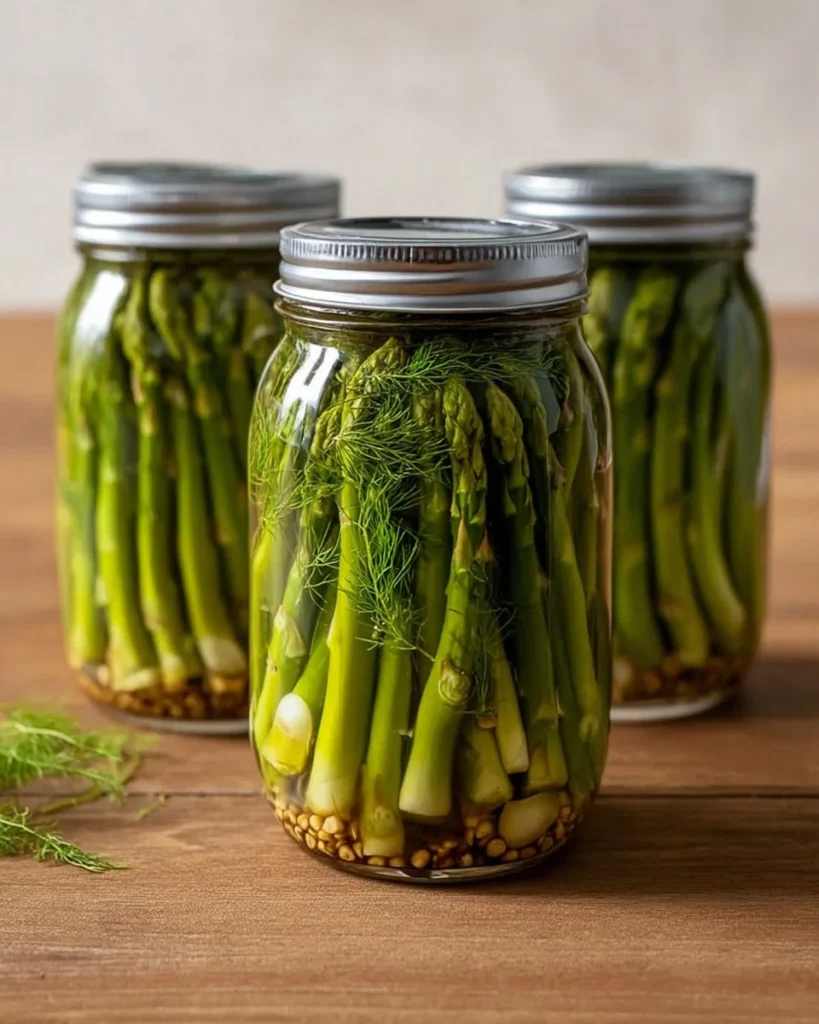
Pickled asparagus is a delightful and tangy treat that adds a burst of flavor and a cheerful crunch to any dish. With its vibrant green color and refreshing taste, it’s no wonder that this recipe has become a beloved favorite. Whether served as an appetizer, salad garnish, or alongside your favorite sandwich, it has the remarkable ability to elevate any meal. There’s something utterly satisfying about the zing of the vinegar and the crunch of the fresh asparagus, which makes it a standout condiment.
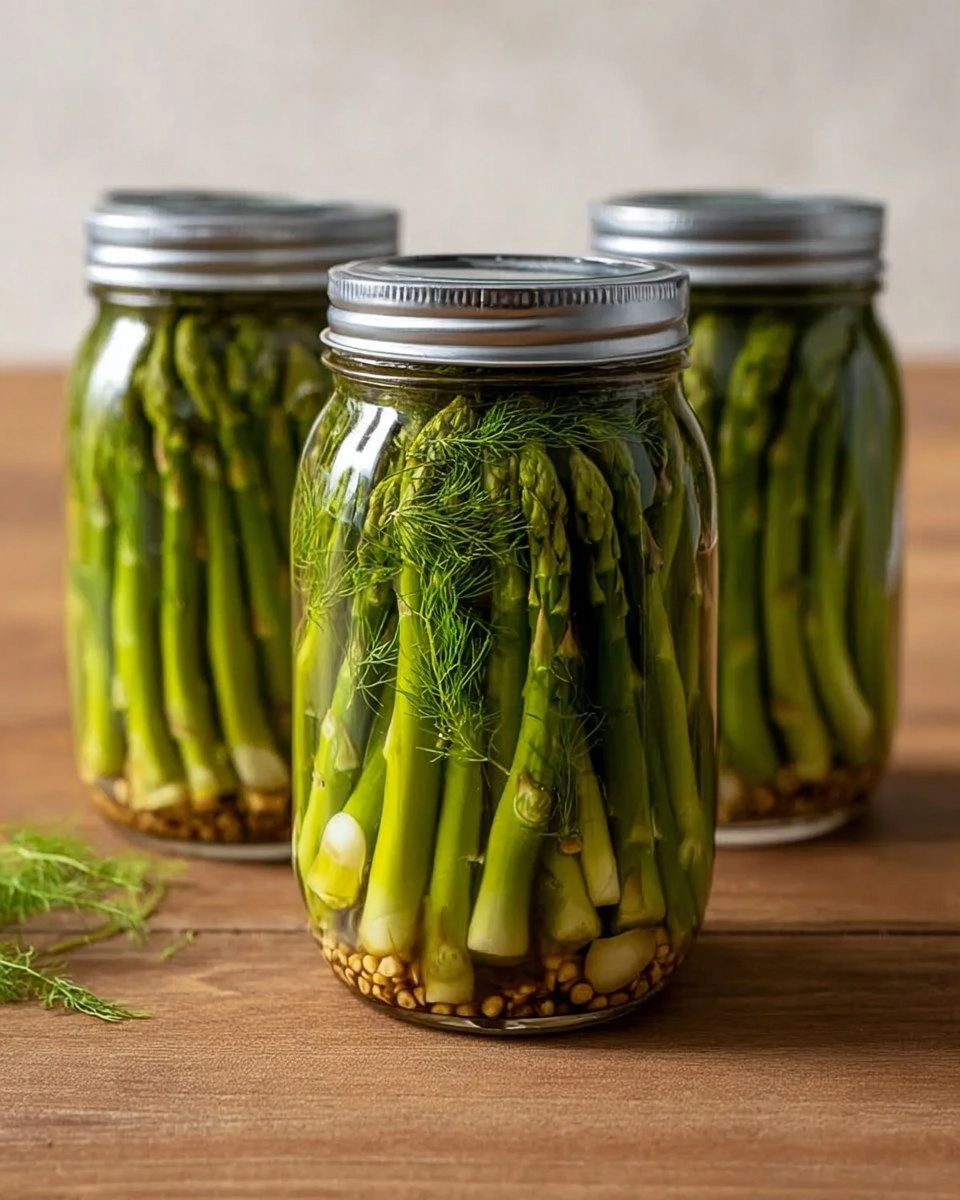
One of my earliest memories of making pickled asparagus was during a family gathering. The kitchen was filled with laughter, and everyone seemed to have their hands on the jars, eager to pop the crisp spears into the brine. As I clumsily tried to pack the jars tightly, my grandmother shared the secret behind “her” famous pickles. The ease of this recipe and the resulting vibrant flavor make it a must-try! I invite you to whip up a batch soon; your taste buds will thank you!
Why You’ll Love This Recipe
- Simple & Quick: This recipe takes only about 10 minutes of prep and 40 minutes of cooking, making it a great choice for a weekend project.
- Irresistible Flavor: The blend of vinegar, garlic, and dill imparts a delightful tang that perfectly complements the fresh asparagus.
- Eye-Catching Appeal: Bright green spears packed in jars look stunning on any table or as a gift for friends.
- Flexible Serving: Enjoy as a snack, a side dish, or as part of a charcuterie board; they fit perfectly into any meal!
- Diet-Friendly Options: Naturally gluten-free, this recipe is a healthy addition to salads, sandwiches, and more.
Ingredients You’ll Need
- 5 cups white vinegar (5% acidity): This is the base of the brine. Opt for a high-quality vinegar for the best flavor.
- 1 quart water: Used to dilute the vinegar and create the pickling liquid.
- 2/3 cup granulated sugar: Balances the tartness of the vinegar and adds a touch of sweetness.
- 1/2 cup pickling salt: Essential for preserving and enhancing flavors. Don’t substitute regular table salt, as it can affect the texture.
- 4 tsp crushed red pepper flakes: Adds a gentle heat and a hint of spice.
- 2 tsp pickling spice: This aromatic blend enhances the overall flavor of the pickles.
- 7 lbs fresh asparagus: Choose firm, vibrant asparagus for the best texture and taste.
- 12 dill sprigs (2 per jar): Provides that quintessential dill flavor that pairs beautifully with pickled vegetables.
- 6 garlic cloves crushed (1 per jar): Adds savory depth to your pickles.
- Ball pickle crisp granules (optional): If you prefer extra crunch, these granules can help maintain the texture of the asparagus.
How to Make Pickled Asparagus
- Clean Your Jars: Start by cleaning your jars and lids in warm, soapy water. Make sure they are free of cracks or chips to ensure a proper seal.
- Prepare Your Canning Setup: If using a water bath canner, fill it with water, adding jars to warm as the water heats. If using a steam canner, follow the manufacturer’s instructions for filling and setup.
- Make the Brine: In a large stainless steel pot, combine 5 cups of white vinegar, 1 quart of water, 2/3 cup granulated sugar, 1/2 cup pickling salt, 4 tsp crushed red pepper flakes, and 2 tsp pickling spice. Heat this mixture over medium-high heat, stirring until the sugar and salt dissolve completely.
- Prep the Asparagus: Rinse your asparagus under cold running water and drain thoroughly. Cut the spears into 5-inch lengths, trimming away any tough ends.
- Crush the Garlic: Peel and crush each garlic clove; these will be packed into your jars for added flavor.
- Fill the Jars: Once the jars are hot, add 2 dill sprigs and 1 garlic clove into each jar. Pack the asparagus tightly with cut ends down, leaving about 1/2 inch (1 cm) of headspace.
- Add Pickle Crisp: Optionally, you can add 1/8 tsp of pickle crisp granules to each jar if you want extra crunch.
- Pour the Hot Brine: Fill the jars with the hot pickling liquid, ensuring the asparagus is fully submerged, again leaving about 1/2 inch of headspace at the top. Use a de-bubbler to remove air bubbles, adding more hot brine as necessary to maintain the headspace.
- Seal the Jars: Wipe the rim of each jar with a clean towel to ensure a good seal. Center the lid on the jar and screw the band down until fingertip tight.
- Process the Jars: Carefully return the filled jars to the canner. For a water bath canner, ensure jars are covered by at least 2 inches of boiling water and process for 10 minutes. For a steam canner, follow the manufacturer’s recommendations, also processing for about 10 minutes.
- Cool the Jars: After processing, carefully remove the jars using a jar lifter and place them onto a cooling rack or clean kitchen towel. Avoid tilting the jars; allow them to cool undisturbed for 12-24 hours.
- Label Your Jars: Once cool, remove the canning rings, wash the jars, and label each with the recipe name and date. This helps you keep track of freshness!
Storing & Reheating
Properly canned pickled asparagus can be stored at room temperature for up to a year. Once opened, store in the refrigerator and consume within a month for the best flavor. You can also freeze it, though this may alter the texture; you’ll want to use it within three months. To refresh any thawed asparagus, try tossing it briefly in a salad or using it in a stir fry for a quick and flavorful dish.
Chef’s Helpful Tips
- Avoid using jars with cracks or chips. A proper seal is crucial for preserving.
- Ensure all ingredients, especially the vinegar and brine, are hot when filling the jars; this helps create a strong seal.
- Adjust spice levels as desired; if you prefer a milder flavor, reduce the crushed red pepper flakes or pickling spice.
- Experiment with different herbs, like thyme or rosemary, for distinct flavor twists.
- Try packing extra garlic for a bold taste; it only intensifies over time.
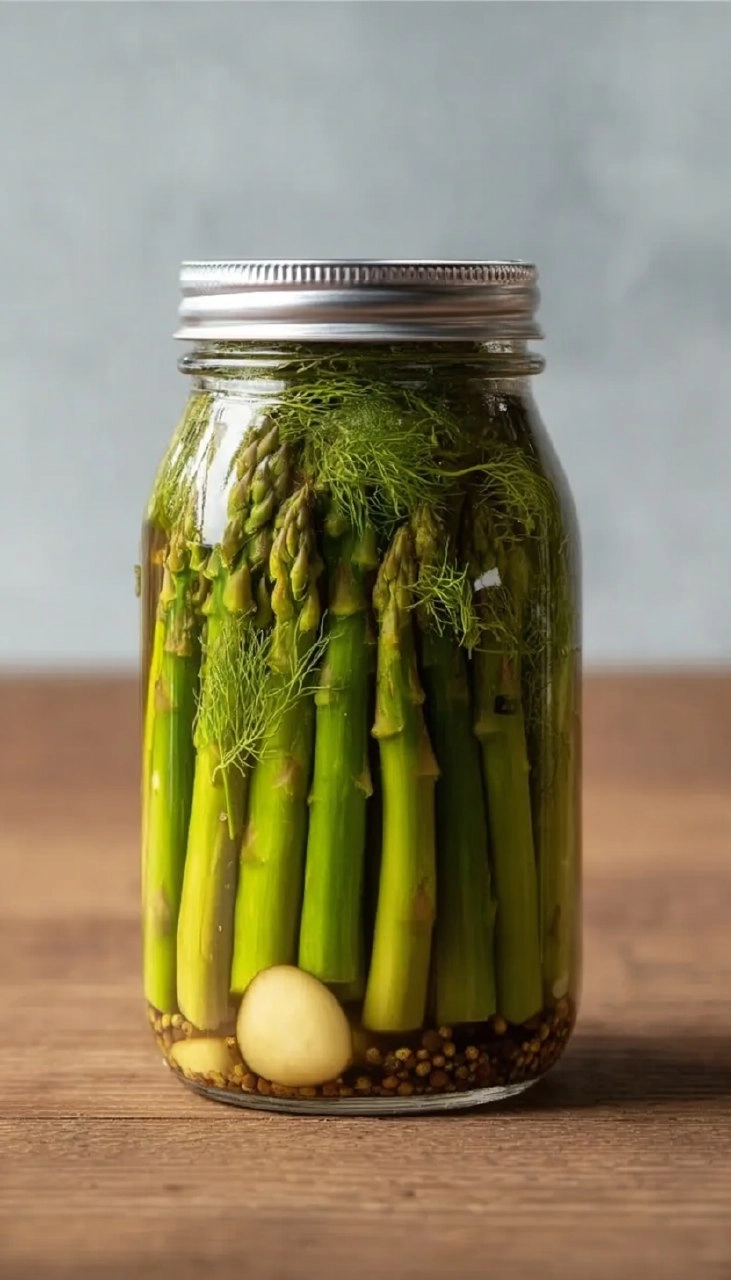
Pickled asparagus offers an irresistible combination of crisp texture and tangy, savory flavor, perfect for snacking or enhancing any meal. Whether you’re new to canning or a seasoned pro, this recipe is straightforward and rewarding. As you gather your ingredients and follow the simple steps, take the time to enjoy the process. Experiment with flavor by adding your favorite spices or herbs! I hope you find as much joy in making this delightful condiment as I have.
Recipe FAQs
How long do pickled asparagus last?
Pickled asparagus can last for up to a year when stored in a cool, dark place. After opening, keep it in the refrigerator and use within a month for the freshest taste.
Can I use frozen asparagus for this recipe?
While you can technically use frozen asparagus, it may lose its crispness once thawed and pickled. For the best results, fresh asparagus is recommended.
What can I do if my lids don’t seal properly?
If you notice that a lid hasn’t sealed correctly, refrigerate that jar immediately and use the contents within a week. For future batches, ensure jars, lids, and brine are hot during sealing.
Can I adjust the spice level in the recipe?
Absolutely! Feel free to decrease the amount of crushed red pepper flakes or eliminate them altogether if you prefer a milder flavor. You can also experiment with different spices to suit your taste.
Print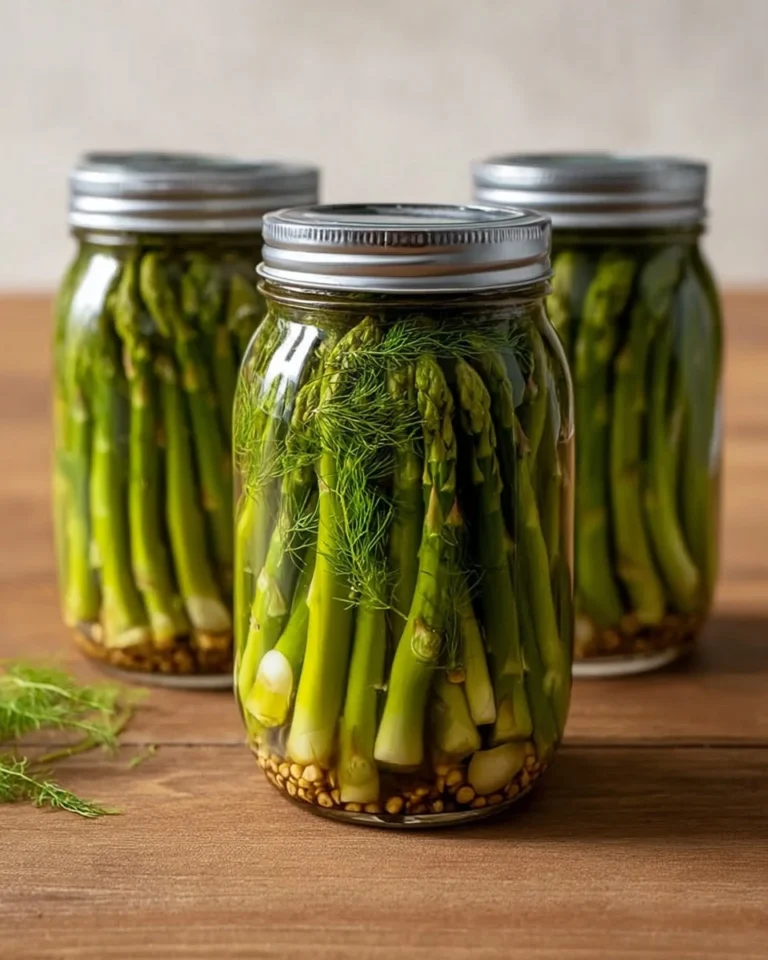
Pickled Asparagus
This Pickled Asparagus bursts with flavor, combining fresh ingredients for an easy, tangy treat. Perfect for appetizers or a quick snack, this recipe highlights the vibrant taste of asparagus, making it a must-try for home cooks looking to preserve seasonal veggies!
- Total Time: 50 minutes
- Yield: 6 servings 1x
Ingredients
- 5 cups white vinegar (5% acidity)
- 1 quart water
- 2/3 cup granulated sugar
- 1/2 cup pickling salt
- 4 tsp crushed red pepper flakes
- 2 tsp pickling spice
- 7 lbs fresh asparagus
- 12 dill sprigs (2 per jar)
- 6 garlic cloves crushed (1 per jar)
- ball pickle crisp granules optional
Instructions
- Clean jars and lids with warm, soapy water, ensuring no chips or bubbles are present.
- For water bath canner: Prepare by adding the canning rack and jars, covering with water and heating to a boil. For steam canner: Add water as per the manufacturer's instructions and warm jars accordingly.
- In a large stainless steel pot, combine vinegar, water, sugar, pickling salt, red pepper flakes, and pickling spice. Bring to a boil while stirring until sugar and salt dissolve.
- Rinse asparagus under cold running water and drain well.
- Cut asparagus into 5-inch lengths and discard any tough ends, ensuring they fit in jars.
- Peel and crush garlic cloves.
- Using hot jars, place 2 dill sprigs and 1 crushed garlic clove in each jar.
- Tightly pack asparagus into the jar with cut ends down, leaving 1/2 inch headspace.
- If desired, add 1/8 tsp pickle crisp to each jar.
- Fill each jar to 1/2 inch from the top with hot pickling liquid, ensuring asparagus is fully covered. Remove air bubbles and adjust headspace if needed.
- Wipe the rim of each jar and center the lid, tightening the band fingertip tight.
- Place the jars back into the canner one at a time, repeating until all jars are filled.
- For water bath canner: Lower jars into boiling water, ensuring they're covered by 2 inches, and process for 10 minutes. For steam canner: Maintain the proper zone temperature and process for 10 minutes, adjusting for altitude if necessary.
- After processing, let jars cool in the canner with the lid for about 5 minutes. Then carefully move them to a wire rack or towel to cool completely.
- Once cooled, remove canning rings, wash jars, and label with the recipe name and date.
Last Step:
Please leave a rating and comment letting us know how you liked this recipe! This helps our business to thrive and continue providing free, high-quality recipes for you.Notes
Ensure jars and lids are clean to avoid spoilage.
Consider adjusting the amount of red pepper flakes for desired heat level.
Label and date each jar to keep track of freshness.
- Prep Time: 10 minutes
- Cook Time: 40 minutes
- Category: Preserving
- Method: Canning
- Cuisine: American
Nutrition
- Serving Size: 1 jar
- Calories: 120
- Sugar: 22g
- Sodium: 900mg
- Fat: 2g
- Saturated Fat: 0g
- Unsaturated Fat: 0g
- Trans Fat: 0g
- Carbohydrates: 24g
- Fiber: 2g
- Protein: 2g
- Cholesterol: 0mg